

Oklahoma State’s stunning turnaround offers a glimpse at what could become one of the most fascinating possibilities in college football’s next coaching carousel.
The Cowboys had been miserable. They went 4–20 over the previous two seasons, finished 1–11 in 2025 and carried a 21-game losing streak against FBS opponents into last Saturday’s meeting with No. 6 Oregon.
Then OSU pulled off the unimaginable.
The Cowboys defeated Oregon 39–31 despite entering as 23½-point underdogs. They outgained the Ducks 554–281 and produced their biggest victory in years behind a collection of coaches and players who had already won together somewhere else.
Eric Morris left North Texas to become Oklahoma State’s head coach. Quarterback Drew Mestemaker followed him to Stillwater, along with running back Caleb Hawkins, receiver Wyatt Young and several other former Mean Green players.
Those connections made all the difference against Oregon.
Mestemaker passed for 317 yards and two touchdowns while rushing for 109 yards and the go-ahead score. Hawkins added 110 rushing yards and a touchdown. Young finished with 121 receiving yards, including a 52-yard touchdown.
Oklahoma State didn’t merely hire a coach. It imported the foundation of an offense.
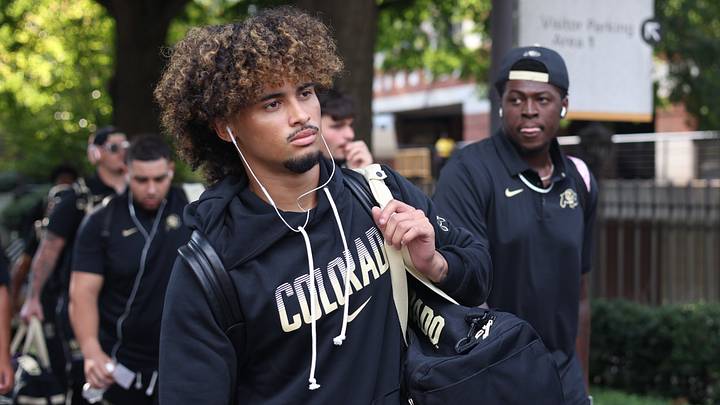
That raises an intriguing question for the coming offseason: Could Coach Prime and Julian Lewis become college football’s next power package?
The blueprint is already working.
Lincoln Riley and Caleb Williams helped establish the modern blueprint when they left Oklahoma for USC. Williams immediately won the Heisman Trophy.
Deion Sanders later brought Shedeur Sanders from Jackson State to Colorado. Matt Campbell recently left Iowa State for Penn State with veteran quarterback Rocco Becht following him. Alex Golesh took Byrum Brown from South Florida to Auburn. Morris and Mestemaker have now produced the most dramatic early result.
Coaches have always brought assistants and recruits with them. The transfer portal has expanded that possibility. A school can now hire a head coach and potentially acquire his quarterback, playmakers and several other players at the same time.
That could substantially increase Sanders’ value if Colorado reaches a bowl this season.
Coach Prime would be able to show prospective employers that Colorado’s nine-win 2024 season wasn’t solely the product of Shedeur Sanders and Travis Hunter. He would have rebuilt the Buffaloes around another quarterback and returned the program to postseason contention following a disappointing 2025 season.
Lewis is what could make the situation different.
The former five-star prospect redshirted in 2025 and would have three seasons of college eligibility remaining after this season. He must play at least one more year before becoming eligible for the 2028 NFL Draft.
That doesn’t necessarily mean Lewis would leave college at his first opportunity. Because he reclassified, he would be only 20 years old during the 2028 draft. In the right offense, with a lucrative NIL and revenue-sharing agreement, it could make business sense to remain in college for two or three more seasons.
A school pursuing Sanders could therefore be getting more than a famous coach. It might also be adding one of college football’s most promising young quarterbacks and a collection of players prepared to follow them.
Neither Sanders nor Lewis has indicated that he plans to leave Colorado. Lewis would make his own transfer decision, and this scenario remains speculative. But the Oklahoma State example demonstrates why another program might explore the possibility.
Which schools could offer something better than Boulder?
Florida State stands above every other possibility.
Sanders returning to Tallahassee would be one of the biggest stories in college football history. A Florida State legend would be coming home to rescue a program that has fallen dramatically since its undefeated 2023 regular season.
Florida State’s decision to fire athletic director Michael Alford in September only adds intrigue. The next athletic director could ultimately determine Mike Norvell’s future and choose the program’s next football coach.
The financial barriers are enormous. Florida State reportedly would owe Norvell approximately $46 million if it fired him after this season, while Sanders would owe Colorado $10 million for leaving during 2026. That does not include Sanders’ next contract, his coaching staff or the resources necessary to acquire Lewis and other players.
Still, Florida State is the one destination where history, emotion and donor desperation could make the impossible seem possible.
USC would offer the best combination of football and business opportunities. Sanders in Los Angeles would command national attention, strengthen USC’s recruiting presence and create enormous marketing possibilities. The Trojans’ relationship with Nike would also fit Sanders’ personal brand.
Lincoln Riley’s reported buyout makes firing him extremely expensive. The scenario becomes far more realistic if Riley voluntarily leaves for the NFL or another job. USC has always valued star power, and few potential hires could generate a larger reaction than Sanders arriving with Lewis.
Clemson might provide Sanders with his best opportunity to win immediately. The Tigers have championship infrastructure, strong recruiting territory and a more manageable path through the ACC than Sanders would face in the SEC or Big Ten.
Sanders’ public faith would also fit the faith-centered culture Dabo Swinney built around Clemson football. However, Clemson reportedly would owe Swinney approximately $57 million if it fired him. Like USC, this possibility probably requires the current coach to leave voluntarily.
Texas offers virtually everything Sanders could want: unlimited resources, elite recruiting territory, a national brand and a roster capable of competing for championships immediately.
It is also one of the least likely jobs to become available. Steve Sarkisian has previously denied NFL interest, and Texas has little reason to consider a change. If Sarkisian eventually decides to pursue the NFL, however, Sanders and Lewis would at least make for an intriguing conversation.
Miami would be the most entertaining possibility, but Mario Cristobal isn’t going anywhere under normal circumstances. He led the Hurricanes to last season’s national championship game, recently received another long-term contract and has Miami positioned among the country’s leading contenders again.
Perhaps a national championship would generate NFL interest in Cristobal. Otherwise, the job should remain closed. Miami also just announced a long-term partnership with Nike.
Other jobs that could become available include Wisconsin, Rutgers, Maryland and Mississippi State. None of them appear to offer enough advantages over Colorado. Wisconsin might be slightly more attractive because of its Big Ten history and financial resources, but its new 10-year agreement with Under Armour creates a potential conflict with Sanders’ Nike business.
Sanders doesn’t need to leave Colorado simply because another school calls. Boulder has embraced him, his influence extends well beyond football and his current contract pays him like one of the sport’s elite coaches.
 Add us as a preferred source on Google