

College football’s hot seat is rarely determined by wins and losses alone.
Contracts, buyouts, administrative support, recruiting, attendance and the availability of a better replacement all factor into whether a school actually makes a coaching change. This is especially important when evaluating Deion Sanders at Colorado.
Sanders entered 2026 under pressure following a 3–9 season, but Colorado’s season-opening victory at Georgia Tech immediately lowered the temperature. Even if the Buffaloes disappoint and finish 5–7, Colorado must determine what it would actually accomplish by paying a substantial buyout, sacrificing Sanders’ commercial value and beginning another rebuild.
Here are the Big 12 hot seat rankings following the opening week of the 2026 season.
The hottest seats in the Big 12
1. Dave Aranda, Baylor
Temperature: Scorching
Baylor retained Aranda for 2026, but the university made it clear that its new athletic director would evaluate the program’s long-term direction. That sounded more like a temporary reprieve than a meaningful vote of confidence.
The Bears then opened the season with a 17–16 loss to Auburn. Aranda is 36–37 at Baylor and reportedly has a buyout exceeding $12 million. The price is significant, but another losing season would make it difficult for new leadership to justify maintaining the status quo.
2. Scott Satterfield, Cincinnati
Temperature: Hot
Cincinnati’s 34–15 victory over Boston College provided Satterfield with an encouraging start, but one win cannot erase three uneven seasons.
Satterfield entered 2026 with a 15–22 record at Cincinnati. If the Bearcats fire him following the season, the school would reportedly owe him approximately $5.53 million. That is substantial for Cincinnati but manageable enough that it will not necessarily save him.
Reaching a significant bowl game may be the minimum requirement.
3. Rich Rodriguez, West Virginia
Temperature: Warm and rising
Rodriguez’s return to West Virginia carried considerable emotional appeal, but nostalgia has a limited shelf life. The Mountaineers went 4–8 during the first season of his second tenure, including 2–7 in conference play.
He is unlikely to be fired quickly, but West Virginia needs to demonstrate meaningful progress in Year 2.
4. Scott Frost, UCF
Temperature: Warm
Frost’s history at UCF provides him with more patience than an ordinary second-year coach. His first tenure produced an undefeated season and transformed the program nationally.
The reunion began with a 5–7 campaign and a 2–7 Big 12 record, however. Another losing season would not guarantee a firing, but the goodwill surrounding his return would begin disappearing.
5. Lance Leipold, Kansas
Temperature: Warm
Leipold deserves considerable credit for making Kansas football relevant again, but consecutive 5–7 seasons have interrupted the program’s momentum.
His contract provides considerable protection. Kansas would have owed approximately $22.93 million if it had fired him without cause on Dec. 1, 2025. That figure should decline following 2026 but would still represent an enormous expense.
The contract makes Leipold difficult to fire, even if pressure continues building.
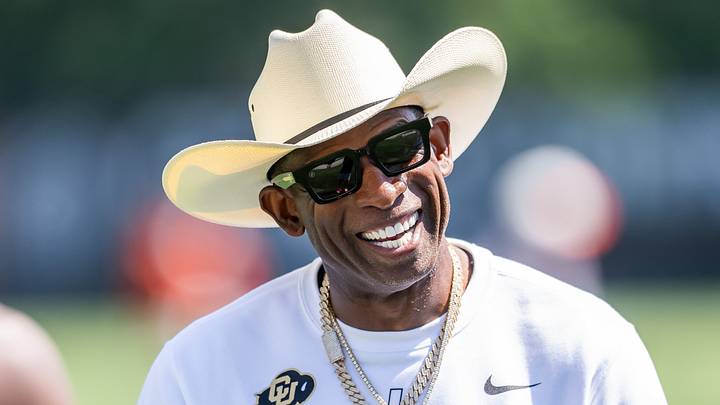
6. Deion Sanders, Colorado
Temperature: Warm
Sanders’ seat may appear hotter nationally than it feels inside Colorado.
The Buffaloes’ 3–9 record in 2025 created legitimate questions, but the dramatic 14–13 victory at Georgia Tech demonstrated improved physicality, coaching and late-game resilience. Colorado also signed Sanders to a five-year, $54 million extension running through 2029.
Even a 5–7 finish would leave the university facing a difficult question: What would it actually accomplish by buying out Coach Prime?
Colorado would spend millions, risk another roster exodus and surrender the visibility, ticket demand and commercial value Sanders provides. The school would then have to find a replacement capable of delivering more than Sanders’ nine-win 2024 season.
Unless Colorado completely collapses, disappointment should not be confused with a genuine likelihood of Sanders being fired.
7. Sonny Dykes, TCU
Temperature: Lukewarm
TCU’s 15–10 loss to North Carolina was one of the opening weekend’s biggest disappointments. It was especially damaging because former Horned Frogs quarterback Josh Hoover immediately flourished at Indiana after leaving the program.
Dykes is nevertheless coming off consecutive nine-win seasons and received a multiyear extension in April. TCU did not disclose the financial terms, but his previous contract already ran through 2028 and paid him more than $7 million annually.
The North Carolina loss created criticism. It did not suddenly make Dykes easy to fire.
8. Brent Brennan, Arizona
Temperature: Cooling
Brennan entered 2025 under considerable pressure after going 4–8 during his Arizona debut. He responded with a nine-win season, providing exactly the turnaround the Wildcats needed.
Another major regression could reopen the discussion, but Brennan has earned breathing room.
9. Willie Fritz, Houston
Temperature: Cool
After going 4–8 in his first season, Fritz guided Houston to 10 victories in 2025. That improvement reinforced his reputation as one of college football’s most dependable program builders.
Fritz is not untouchable, but his seat is nowhere near hot entering Year 3.
New coaches and the safest seats
10. Eric Morris, Oklahoma State
Temperature: Protected
Losing the opener to Tulsa was an ugly beginning, but Morris inherited a program requiring a substantial rebuild. Oklahoma State is not making another change after one season.
11. Jimmy Rogers, Iowa State
Temperature: Protected
Rogers inherited the difficult assignment of following Matt Campbell. His previous success and first-year status provide ample security.
12. Collin Klein, Kansas State
Temperature: Protected
A former Kansas State star returning to lead the program will receive time to establish his system. Klein would need a catastrophic off-field development to face immediate danger.
13. Morgan Scalley, Utah
Temperature: Protected
Scalley spent years preparing to succeed Kyle Whittingham and opened his tenure with a victory. Utah’s continuity makes him one of the conference’s safest new coaches.
14. Kenny Dillingham, Arizona State
Temperature: Cold
Dillingham has already led his alma mater to a Big 12 championship and College Football Playoff appearance. Arizona State would need to experience a sustained collapse before his position became vulnerable.
15. Kalani Sitake, BYU
Temperature: Frozen
Sitake has built BYU into an annual Big 12 contender. The Cougars followed a strong conference debut with another 12-win season and a trip to the 2025 Big 12 Championship Game.
16. Joey McGuire, Texas Tech
Temperature: Untouchable
McGuire owns the safest seat in the conference after leading Texas Tech to the 2025 Big 12 championship and the College Football Playoff.
The expectations in Lubbock are enormous, but McGuire has earned the opportunity to manage them.
Ten hottest seats outside the Big 12
These rankings measure pressure created by performance and expectations. They are not strictly predictions of which coach will be fired first.
- Luke Fickell, Wisconsin: Consecutive losing seasons followed by a 41–13 loss to Notre Dame make him the national leader.
- Dabo Swinney, Clemson: Clemson’s 51–10 humiliation at LSU intensified questions about whether Swinney can restore the program, although his reported $57 million buyout complicates any change.
- Mike Norvell, Florida State: The decline since Florida State’s 13–1 season has become increasingly difficult to explain. Another brutal home loss last night in a spotlight game.
- Greg Schiano, Rutgers: Losing 37–21 at home to UMass as a 29.5-point favorite immediately moved Schiano near the top.
- Dave Doeren, NC State: A 34–8 loss to Virginia amplified frustration surrounding a program that has struggled to break through.
- Butch Jones, Arkansas State: Jones needs tangible progress after five seasons of inconsistent results.
- Mike Locksley, Maryland: Consecutive 4–8 seasons have exhausted much of the patience created by Maryland’s earlier bowl victories.
- Tim Albin, Charlotte: A triple-overtime loss to FCS opponent The Citadel extended Charlotte’s losing streak to 10 games.
- Jeff Lebby, Mississippi State: A dominant opening victory helped, but Lebby entered Year 3 with a 7–18 record.
- P.J. Fleck, Minnesota: Fleck remains relatively secure but needs to demonstrate that Minnesota has not settled into permanent mediocrity.
 Add us as a preferred source on Google